


Bee Wax
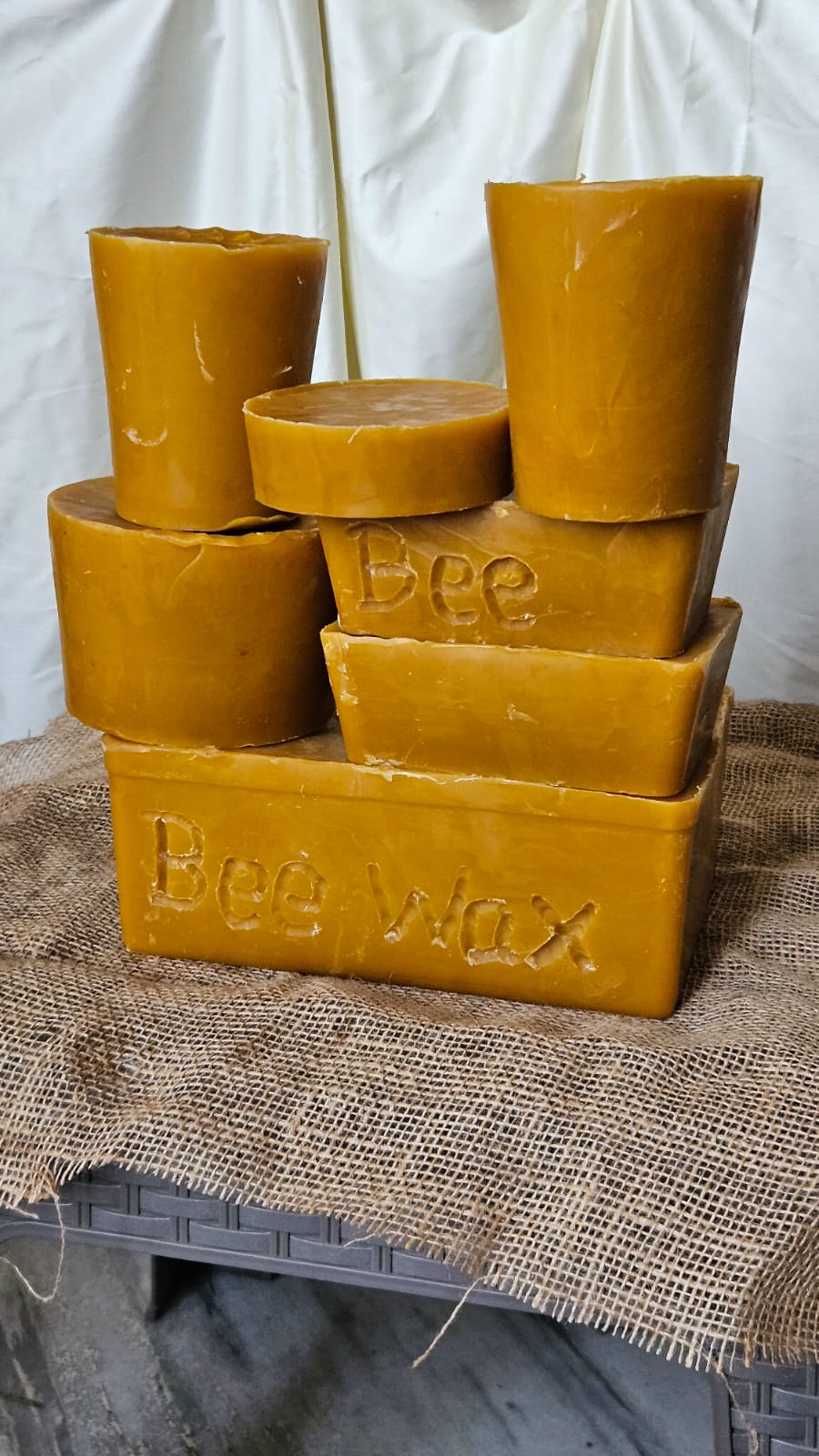
Beeswax is a natural substance produced by honeybees (Apis mellifera) through the glands in their abdomen. It is a valuable material used by bees to build their honeycombs, where they store honey, raise their brood, and store pollen. Beeswax has been used by humans for various purposes for thousands of years due to its unique properties.
Composition: Beeswax is primarily composed of esters, fatty acids, and hydrocarbons. The exact composition of beeswax can vary depending on factors such as the type of flowers from which bees gather nectar and pollen. It typically consists of around 70-75% esters, 14-24% fatty acids, and 12-15% hydrocarbons.
Physical Properties: Beeswax is solid at room temperature but has a relatively low melting point ranging from approximately 62 to 64 degrees Celsius (144 to 147 degrees Fahrenheit). Its color can vary from pale yellow to dark brown, depending on impurities and processing methods. The texture of beeswax is smooth and pliable.
Uses:
- Candle making: Beeswax is commonly used to make candles due to its pleasant scent, slow and clean burning characteristics, and natural golden color.
- Cosmetics and personal care products: Beeswax is used in various skincare and cosmetic products such as lip balms, lotions, creams, and soaps. It acts as a natural emulsifier, providing texture and stability to these products.
- Woodworking and furniture polishing: Beeswax is used as a natural wood finish and polish. It nourishes and protects the wood while creating a smooth, lustrous surface.
- Art and crafts: Beeswax is an essential ingredient in encaustic painting, where it is mixed with pigments to create vibrant colors and textures. It is also used in sculpting, modeling, and batik techniques.
- Food and cooking: Beeswax is considered safe for consumption and has limited applications in the food industry. It is sometimes used to coat cheeses, fruits, and vegetables to extend their shelf life and maintain freshness.
- Pharmaceuticals: Beeswax is used as a base ingredient in certain pharmaceutical preparations, including ointments and salves, to provide texture and consistency.
Benefits and Characteristics:
- Natural and renewable: Beeswax is a sustainable resource, as it is produced by bees as part of their natural life cycle.
- Non-toxic: Beeswax is generally considered safe for humans and does not contain harmful chemicals or additives.
- Moisturizing and protective: It forms a breathable barrier on the skin, locking in moisture and protecting it from environmental factors.
- Hypoallergenic: Beeswax is well-tolerated by most individuals and is less likely to cause allergic reactions compared to synthetic alternatives.
In conclusion, beeswax is a versatile and valuable natural substance produced by honeybees. Its unique properties make it suitable for a wide range of applications in various industries, including cosmetics, art, woodworking, and food.